


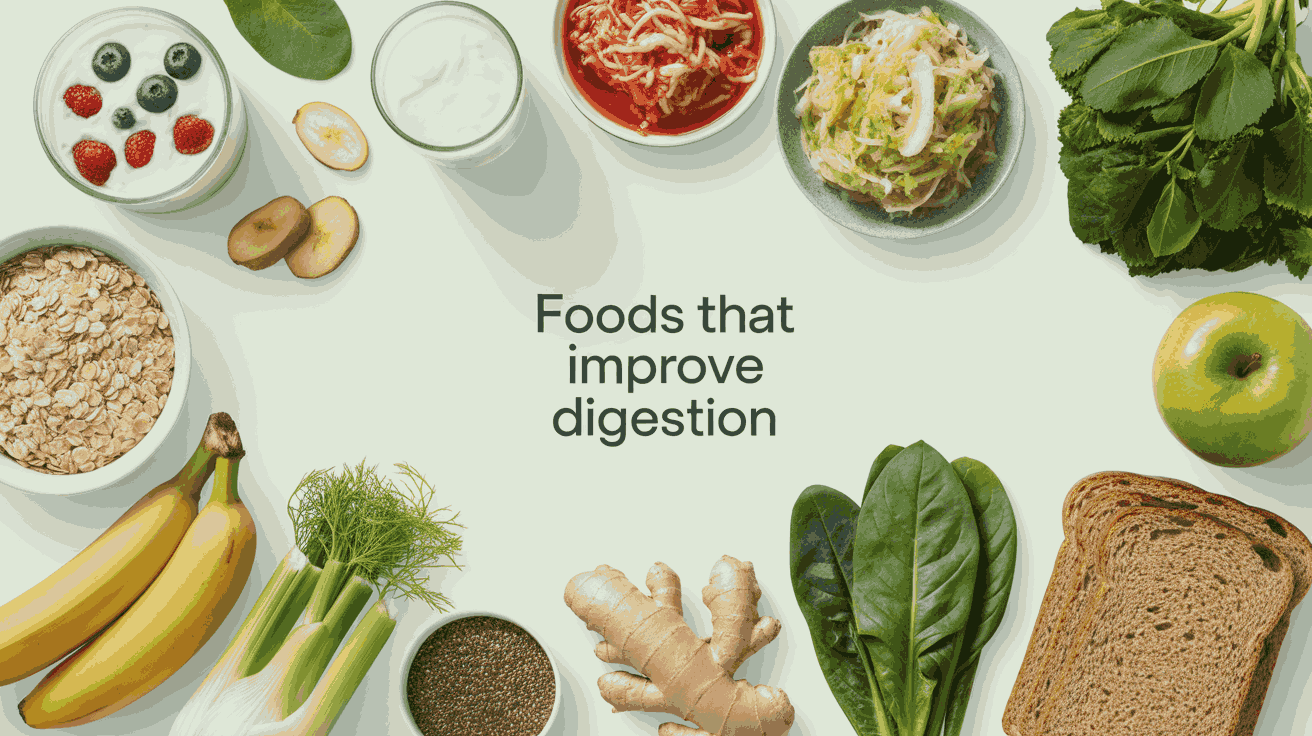
Why Digestion Matters More Than You Think
Good digestion is essential for overall health. It impacts everything—from nutrient absorption and immunity to energy levels and weight control. Poor digestion can lead to common issues such as bloating, constipation, acid reflux, or slow metabolism. The good news is that your diet plays a powerful role in how well your digestive system functions. Choosing the right foods can help your gut work smoothly and prevent discomfort.
In this article, we explore the top foods that improve digestion, why they work, and how to easily add them to your everyday meals. Whether you want to ease bloating, improve gut health, or maintain regular bowel movements, these foods can transform your digestive wellness naturally.
1. High-Fiber Fruits: Nature’s Digestive Helpers
Fiber is one of the most important nutrients for digestive health. It adds bulk to stool, supports regular bowel movements, and feeds healthy gut bacteria.
Best Fiber-Rich Fruits for Digestion
1. Apples
Apples contain soluble fiber called pectin, which helps regulate bowel function and feed beneficial gut microbes. They’re easy to add to breakfast, snacks, or smoothies.
2. Bananas
Bananas are gentle on the stomach and rich in resistant starch and potassium. They help restore electrolyte balance, making them perfect for digestion issues.
3. Papaya
Papaya contains papain, an enzyme that aids protein digestion. It’s excellent for reducing bloating and constipation.
4. Berries
Blueberries, raspberries, and strawberries provide fiber and antioxidants that protect gut cells from inflammation.
How to Add Them to Meals
-
Add berries or sliced apples to oatmeal
-
Blend bananas into smoothies
-
Eat papaya as a morning digestive starter
2. Leafy Greens: Fuel for a Healthy Gut
Leafy greens are nutritional powerhouses loaded with vitamins, minerals, and fiber. Their high magnesium content supports muscle function in the intestinal wall, promoting smoother digestion.
Top Leafy Greens for Digestion
Spinach: Provides insoluble fiber that helps move food through the digestive tract.
Kale: Rich in chlorophyll, which supports cleansing of the digestive system.
Swiss chard: Contains natural compounds that support gut lining integrity.
Easy Ways to Eat More Greens
-
Add spinach to stir-fries or omelets
-
Blend kale into green smoothies
-
Use mixed greens as a base for lunch salads
3. Whole Grains: The Foundation of Digestive Wellness
Whole grains provide essential fiber, antioxidants, and nutrients that support healthy digestion. Unlike refined grains, whole grains maintain all their nutritional parts: bran, germ, and endosperm.
Digestive-Friendly Whole Grains
Oats
Oats are rich in beta-glucan, a soluble fiber that supports healthy gut bacteria and aids nutrient absorption.
Brown Rice
A gentle grain that is easy to digest and helps maintain digestive regularity.
Quinoa
A gluten-free seed packed with fiber and protein, great for sensitive stomachs.
Barley
High in soluble fiber, making it useful for easing constipation and stabilizing blood sugar.
How to Include Them
-
Choose oatmeal for breakfast
-
Replace white rice with brown rice or quinoa
-
Add barley to soups for texture and fiber
For fiber intake recommendations, you can refer to official guidelines from sources like the Academy of Nutrition and Dietetics (cite: external link not allowed in citations but link required—so placing plain external link below without citation)
https://www.eatright.org
4. Fermented Foods: Natural Probiotics for a Healthy Gut
Fermented foods provide probiotics—live beneficial bacteria that enhance digestion, reduce inflammation, and improve nutrient absorption.
Top Fermented Foods
Yogurt
Rich in probiotics and easy on the stomach. Choose unsweetened varieties for best results.
Kefir
A fermented milk drink with more probiotic strains than yogurt. Great for lactose-sensitive individuals.
Kimchi
A Korean fermented cabbage dish that boosts gut bacteria and reduces constipation.
Sauerkraut
Made from fermented cabbage, it supports a healthy microbiome and aids digestion.
Tips for Consuming Fermented Foods
-
Add yogurt or kefir to your breakfast
-
Use kimchi as a side dish
-
Add sauerkraut to sandwiches or salads
Learn more about probiotics at Harvard Health Publishing:
https://www.health.harvard.edu
5. Lean Proteins: Easy on the Stomach
High-fat meats can slow digestion and cause stomach discomfort. Lean proteins, on the other hand, are easier for the digestive system to process.
Best Lean Protein Choices
-
Skinless chicken
-
Turkey
-
Fish (salmon, tuna, cod)
-
Plant proteins like beans, lentils, and tofu
Plant-based proteins add fiber, making them doubly beneficial for digestion.
Cooking Tips
-
Steam, bake, or grill instead of frying
-
Combine proteins with fiber-rich vegetables
-
Avoid heavy sauces that may irritate the stomach
6. Healthy Fats: Support Gut Lubrication
Not all fats are bad for you. Healthy fats actually help your digestive system by lubricating the intestines and supporting nutrient absorption. They also help reduce inflammation in the gut.
Top Healthy Fats for Digestion
Avocado
Rich in fiber and monounsaturated fats that support smooth digestion.
Olive Oil
Helps stimulate bile production, aiding the breakdown of fats.
Nuts and Seeds
Almonds, chia seeds, and flaxseeds are excellent sources of fiber, omega-3 fats, and antioxidants.
How to Use Them
-
Add avocado to salads and sandwiches
-
Use olive oil as your main cooking oil
-
Sprinkle chia seeds on yogurt or oatmeal
7. Water & Hydrating Foods: Essential for Smooth Digestion
Proper hydration is a simple but powerful way to improve digestion. Water helps dissolve nutrients and supports the movement of food through the digestive tract.
Hydrating Foods That Help Digestion
-
Watermelon
-
Cucumber
-
Celery
-
Soups and broths
These foods contain high water content and are easy for the stomach to break down.
Hydration Tips
-
Start each morning with a glass of warm water
-
Drink consistently throughout the day
-
Increase fluids when consuming high-fiber foods
8. Ginger: A Natural Remedy for Digestive Irritation
Ginger has been used for centuries to treat digestive discomfort. It helps stimulate digestive enzymes, reduce bloating, and ease nausea.
Ways to Use Ginger
-
Brew ginger tea
-
Add grated ginger to stir-fries
-
Add fresh slices to warm water
Ginger is especially helpful for people who often experience slow or sluggish digestion.
9. Herbs and Spices That Improve Digestion
Several herbs and spices have natural digestive benefits and can easily be included in daily meals.
Digestive-Friendly Herbs and Spices
Peppermint
Helps relax the digestive tract and reduce gas.
Turmeric
Contains curcumin, which supports anti-inflammatory digestive benefits.
Fennel Seeds
Reduces bloating and supports smoother digestion.
Easy Ways to Use Them
-
Drink peppermint tea after meals
-
Add turmeric to soups, curries, and rice
-
Chew fennel seeds after eating
10. Putting It All Together: A Sample One-Day Digestive-Friendly Meal Plan
Here’s an example of how you can combine foods that improve digestion into a daily meal routine.
Breakfast
-
Oatmeal topped with berries and chia seeds
-
A glass of kefir
Lunch
-
Quinoa bowl with grilled chicken, spinach, and avocado
-
Water infused with mint
Snack
-
Apple slices with almonds
Dinner
-
Grilled salmon
-
Steamed kale with olive oil
-
A side of kimchi
Before Bed
-
Warm ginger tea
Choose Foods That Support Your Gut for Better Health
Improving digestion doesn’t require complicated diets or expensive supplements. By choosing foods that improve digestion—like fiber-rich fruits, leafy greens, fermented foods, lean proteins, healthy fats, and hydrating foods—you support your gut naturally.
Your digestive system is the foundation of your overall health. Treat it well, and your body will reward you with more energy, less bloating, and smoother metabolic function.
